
Insights

Woman comparing CRUT and NIMCRUT documents while reviewing financial planning options.

CRUT vs. NIMCRUT: Why the Tax and Distribution Rules Matter

Understanding how charitable remainder trusts affect your cash flow, income taxes, and long-term financial planning. Key takeaway: Choosing between a standard charitable remainder unitrust (CRUT) and a net income with makeup charitable remainder unitrust (NIMCRUT) can affect how much income you receive, when you receive it, and how your distributions are taxed. If you own highly appreciated assets, a charitable


Read More »
Accounting professionals using AI-assisted financial dashboards to analyze business performance

How Outsourced Accounting and AI Can Help Your Business Flourish 

A practical look at how AI can make outsourced accounting faster, more insightful, and more valuable to management  Artificial intelligence is changing the accounting profession, but the biggest opportunity is not simply automating bookkeeping.  The greater opportunity is combining AI with outsourced accounting professionals to produce faster financial information, stronger analysis, better documentation, and more useful insight for management.  For

Read More »
Business leaders reviewing monthly financial statements after month-end close

Why Closing the Books on Time Matters for Better Business Decisions

One of the most common reasons organizations come to Greenwood Ohlund (GO) for outsourced accounting and CAS services is surprisingly fundamental: They are not closing their books and receiving monthly financial statements on time. Timely financial reporting is critical because management cannot make informed decisions without accurate, current financial information. A consistent month-end close gives leadership visibility into revenue, expenses,

Read More »
CFO presenting financial information at a board meeting

Why Your CFO Should Attend Board Meetings

Better Financial Oversight, Transparency, and Governance Should the CFO Attend Board Meetings? In most organizations, yes, the CFO or senior financial leader should regularly participate in Board meetings, particularly when financial performance, budgets, forecasts, cash flow, organizational risk, or long-term strategy are being discussed. The reason goes well beyond presenting financial statements. Having the CFO at the Board table creates

Read More »

Switching Banks? What Small and Medium-Sized Organizations Should Consider

Changing banks can create meaningful benefits for a small or medium-sized organization. A new banking relationship may offer better technology, improved customer service, lower fees, stronger fraud controls, greater borrowing capacity, or products that better support the organization’s growth. However, switching banks is rarely as simple as opening a new account and transferring the cash. Bank accounts are often connected

Read More »
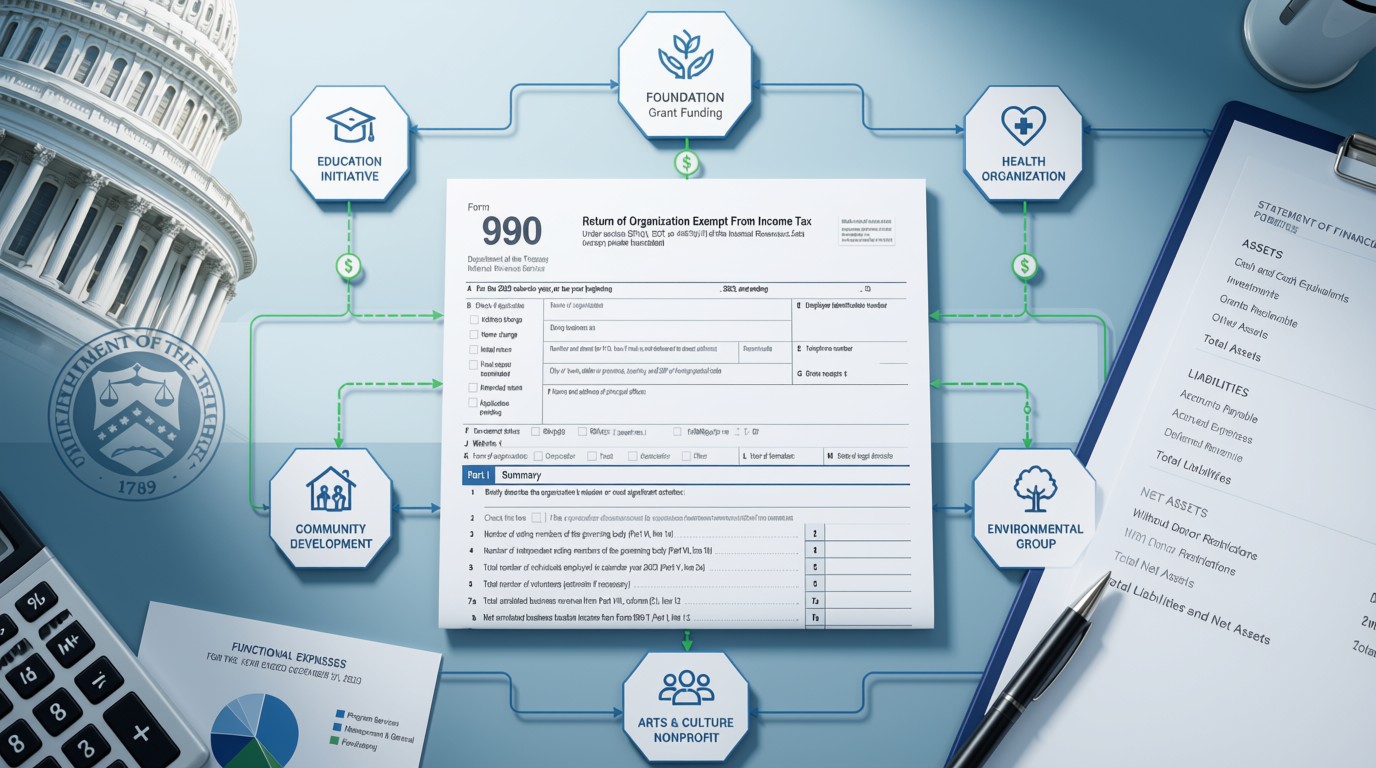
IRS Form 990 transparency changes affecting nonprofit fiscal sponsorship reporting

The Form 990 Rarely Changes – So Why Is Everyone Talking About Fiscal Sponsorships?

Key Takeaway: While no new Form 990 reporting requirements have been proposed, recent statements from the U.S. Department of the Treasury suggest the IRS is taking a closer look at how nonprofits receive and manage funding. Now is a good time to review your gift acceptance procedures—particularly for fiscal sponsorships—to ensure your organization is well positioned if future reporting or

Read More »
IRS Automatic Penalty Relief (AEP) illustration explaining penalty relief eligibility and First Time Abate for taxpayers in 2026.

IRS Automatic Penalty Relief (AEP): What Taxpayers Need to Know for 2026

Automatic Penalty Relief is a new IRS initiative designed to reward taxpayers with a strong compliance history. Rather than requiring eligible taxpayers to request penalty relief after receiving a notice, the IRS intends to apply qualifying relief automatically for certain penalties. The program is expected to reduce reliance on the long-standing First Time Abate (FTA) process for many taxpayers. The

Read More »
Jimothy the famous Ballard raccoon walking through a Seattle neighborhood, inspiring lessons about sudden business growth and financial planning.

Jimothy Goes Viral: What Seattle’s Favorite Raccoon Can Teach Small Businesses About Sudden Fame

Jimothy may not have a business plan, a bookkeeper, or even a permanent address, but his sudden rise to fame offers several surprisingly useful lessons for small and medium-sized businesses. The unusually shaped raccoon became a Seattle celebrity after videos of him wandering through Ballard attracted millions of views. Within days, Jimothy inspired social media accounts, artwork, merchandise, tattoos, a

Read More »
protecting mailed paper checks from fraud

Check Fraud in the Mail: How to Protect Yourself

Why Mailing Checks Is Becoming a Bigger Fraud Risk — And What You Can Do About It Check fraud is rising sharply, and mailed paper checks are one of the easiest targets. Digital payments may be the norm, but many businesses and individuals still rely on paper checks for vendors, taxes, rent, and other transactions. That habit has made checks

Read More »
Startup financial modeling for cash flow, runway, cash burn, and funding decisions

Financial Modeling for Startups and Growing Small Businesses: Cash Flow, Runway, and Funding Decisions

A practical financial model helps founders and business owners forecast revenue, control operating expenses, understand cash burn, plan funding needs, and communicate clearly with boards, lenders, and investors. A financial model helps a startup or growing small business forecast revenue, operating expenses, cash flow, cash runway, cash burn, profitability, and funding needs. Unlike a static budget, a financial model can

Read More »

Clean Energy Tax Credits for Nonprofits and Businesses: IRC Section 48E and Elective Pay Explained

Organizations investing in qualifying clean electricity generation and energy storage projects may be eligible for a valuable federal tax incentive under IRC Section 48E, the Clean Electricity Investment Credit. Depending on the facts, the credit can equal up to 30% of eligible project costs, making it an important consideration for organizations planning significant capital investments. Although many organizations first encounter

Read More »

A CFO’s Guide to Debt Financing for Nonprofits and Growing Organizations

A CFO advisory guide to evaluating loan structure, debt covenants, refinancing risk, tax-exempt financing, and cash flow impact for nonprofits and small to mid-sized organizations. For many small and mid-sized organizations, debt financing is one of the most significant financial decisions leadership and the board will make. Whether an organization is refinancing existing debt, purchasing a facility, funding a capital

Read More »
Accounting should be boring

Case Study: How Better Onboarding Turned a Duplicated Revenue Mess into “Boring” Accounting

When a client of ours began working with our outsourced accounting team, the organization was dealing with a significant accounting cleanup issue. Their point-of-sale system, Zenoti, had not been properly mapped into QuickBooks Online, which caused a substantial amount of duplicated activity, particularly duplicated revenue. Management knew there was a problem, but the accounting records were not reliable enough to

Read More »
Students walking through a Pacific Northwest independent school campus

Five Financial KPIs Every Independent School Should Monitor

Independent schools are mission-driven organizations, but long-term mission success depends on financial sustainability. Board members and school leaders need clear, consistent financial indicators that help them understand whether the school’s operating model is healthy, whether tuition is keeping pace with costs, and whether resources are being used in a way that supports students, faculty, and the broader school community. While

Read More »