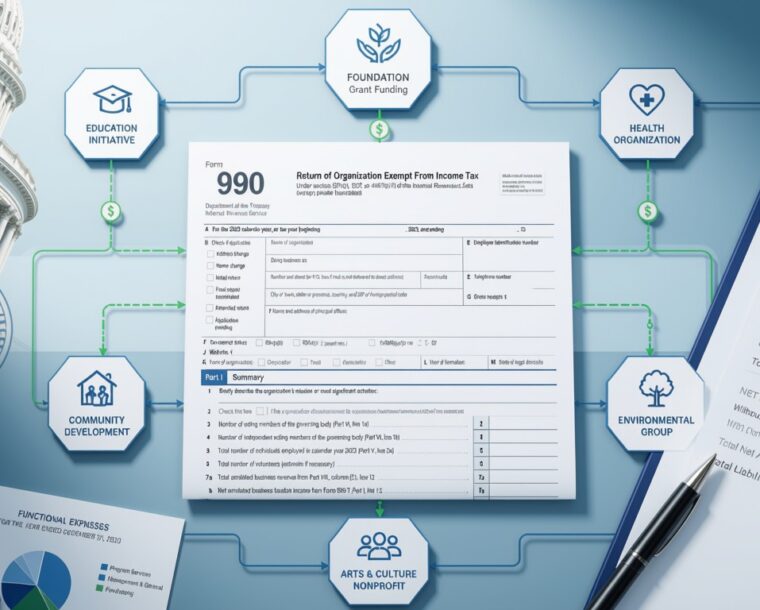
Key Takeaway: While no new Form 990 reporting requirements have been proposed, recent statements from the U.S. Department of the Treasury suggest the IRS is taking a closer look at how nonprofits receive and manage funding. Now is a good time to review your gift acceptance procedures—particularly for fiscal sponsorships—to ensure your organization is well positioned if future reporting or compliance changes are introduced.
If you’ve worked with nonprofit tax filings for any length of time, you know one thing is almost always true: the Form 990 doesn’t change very often. That’s why even the possibility of new reporting requirements gets people’s attention.
Recent statements from the U.S. Department of the Treasury suggest the IRS is placing greater emphasis on transparency in how nonprofits receive, manage, and report funding. While much of the discussion has focused on fiscal sponsorship arrangements, the broader transparency initiative also reflects increased attention on other significant funding sources, including government grants and contracts.
Although no formal regulations have been proposed and there is currently no implementation timeline, nonprofits should begin thinking now about how increased IRS scrutiny could affect their organizations. Many organizations already have strong internal controls surrounding charitable contributions, grants, and contracts. Taking a fresh look at your gift acceptance procedures and documentation practices now can help position your organization for any future reporting or compliance changes.
Why Is the IRS Looking at Fiscal Sponsorships?
Fiscal sponsorships play an important role in the nonprofit sector by allowing charitable projects to operate under the umbrella of an established tax-exempt organization. These arrangements have become increasingly common as nonprofits collaborate on new initiatives and charitable programs. When managed properly, they provide an efficient way to launch new initiatives and expand charitable impact.
The IRS, however, appears to be taking a closer look at situations where it may not be clear who is actually directing charitable funds. A fundamental requirement of a fiscal sponsorship arrangement is that the sponsoring organization – not the donor or another outside party – must retain discretion and control over how charitable funds are ultimately used. If donors or third parties effectively control the use of those funds, the arrangement may not meet IRS expectations.
As part of its broader transparency initiative, the IRS appears to be evaluating ways to enhance oversight of how tax-exempt organizations receive, administer, and report significant sources of funding. Although the details have not yet been released, organizations should be aware that fiscal sponsorships and other complex funding arrangements are likely to receive increased attention.
What Nonprofits Should Be Watching
Although the details are still unknown, nonprofits may eventually be expected to perform additional due diligence and provide expanded reporting for significant sources of funding, including charitable contributions, government grants, and government contracts. While the IRS’s transparency initiative appears to have a broader reach, organizations involved in fiscal sponsorship arrangements should expect those relationships to receive particular attention because they raise unique questions about donor intent, organizational control, and stewardship of charitable assets.
Fortunately, many organizations are already doing much of the groundwork. Existing best practices include:
- Maintaining complete donor records and timely written contribution acknowledgments.
- Retaining grant agreements, government contract documentation, donor correspondence, and other supporting records.
- Clearly documenting any donor-imposed restrictions on gifts.
- Ensuring the organization maintains discretion and control over charitable funds, consistent with its fiduciary responsibilities.
- Following a written gift acceptance policy that outlines how contributions are reviewed, accepted, and administered.
- Periodically reviewing fiscal sponsorship arrangements to confirm documentation clearly reflects the organization’s discretion and control over charitable funds.
If additional reporting requirements are introduced, these existing procedures will provide a strong foundation for compliance.
How to Prepare Now
While we’re still waiting for formal guidance from the IRS, now is an excellent time to evaluate your organization’s gift acceptance procedures and documentation practices. A few proactive steps today can make compliance much easier if additional reporting requirements are eventually adopted.
Consider taking the following actions:
- Review your gift acceptance policy.
- Confirm it addresses gifts involving fiscal sponsors, intermediary organizations, or donor-directed contributions.
- Evaluate your donor intake process.
- Consider whether your current forms and procedures capture enough information about who is directing a contribution and whether a third party is involved.
- Discuss options with donors who wish to remain anonymous.
- Although donor names are not disclosed on an organization’s publicly available Form 990, charities are generally required to maintain donor information for IRS reporting and substantiation purposes. For donors seeking greater public anonymity, a donor-advised fund (DAF) may be an appropriate giving vehicle, depending on their circumstances.
- Strengthen your documentation.
- Retain grant agreements, government contract documentation, donor correspondence, and records explaining the purpose of the funding and the role of any fiscal sponsor or intermediary organization.
- Train staff involved in gift acceptance.
- Ensure development, finance, and accounting personnel understand what information should be collected and documented when contributions are received.
- Stay informed.
- Monitor future IRS guidance so your organization can respond promptly if new reporting requirements are introduced.
- Ask additional questions for significant gifts.
- For larger grants and contributions, consider asking:
“Is any individual or organization other than the donor directing, recommending, or otherwise influencing the use of this contribution? If yes, please provide the name of the individual or organization, along with a brief description of their role.”
Looking Ahead
While we don’t yet know exactly what changes, if any, will result from the IRS’s transparency initiative, the overall direction appears to be toward greater transparency in how nonprofits receive, administer, and report funding from a variety of sources.
For organizations engaged in fiscal sponsorship arrangements, now is an especially good time to review policies, strengthen documentation practices, and confirm thatappropriate discretion and control are being exercised over charitable funds. Taking these proactive steps today can help minimize future administrative burdens while reinforcing your organization’s commitment to sound governance and regulatory compliance.
As the IRS continues to refine its transparency initiatives, Greenwood Ohlund will be monitoring developments closely. If you have questions about how potential reporting changes could affect your organization – or would like assistance reviewing your gift acceptance policies and internal procedures – we’re here to help.
Disclaimer: At the time of publication, the IRS has not issued proposed regulations or formally announced changes to Form 990 related to fiscal sponsorship reporting or expanded reporting of government grants and contracts. The discussion above is based on publicly available information, including recent statements from the U.S. Department of the Treasury regarding the IRS’s efforts to improve transparency and tax compliance for tax-exempt organizations, and is intended for general informational purposes only. Because future guidance may evolve, nonprofits should continue to monitor IRS developments and consult with their tax advisors before making significant policy or procedural changes.
Source
U.S. Department of the Treasury. Treasury Announces IRS Actions to Improve Tax Compliance and Close the Tax Gap (Press Release SB0470). Available at: https://home.treasury.gov/news/press-releases/sb0470
Riley Stringer, Tax Manager